YS Falls is seven limestone tiers of the upper YS River, dropping roughly 120 feet through a shaded gorge on the southern side of the Santa Cruz Mountains in Saint Elizabeth Parish. The water comes up cold and filtered from karst springs further along the valley, then drains south and west toward the Black River, the longest river in Jamaica. Land around it stays a working cattle and pimento property, and that single fact shapes everything about a visit: the approach is agricultural, the pace is slow, and nobody herds you past a turnstile with a plastic wristband.
What follows is about what YS Falls looks like, sounds like and feels like underfoot. Practicalities live elsewhere. Footwear rules and pool etiquette sit on Visitor Rules & Guidelines, admission and what to pack on Plan Your Visit, and the drive from Negril or Montego Bay on How to Get to YS Falls. Tour combinations, including the popular pairing with a Black River safari, are on YS Falls & Black River Safari.
Seven tiers, one river, and a valley that has been doing this for a very long time.
Reading the Seven Tiers
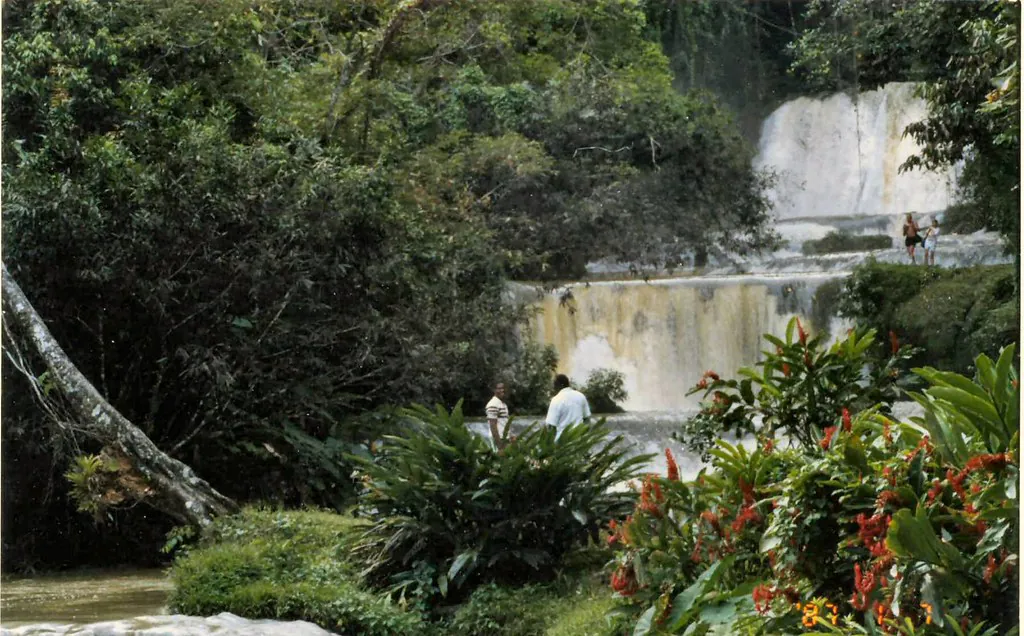
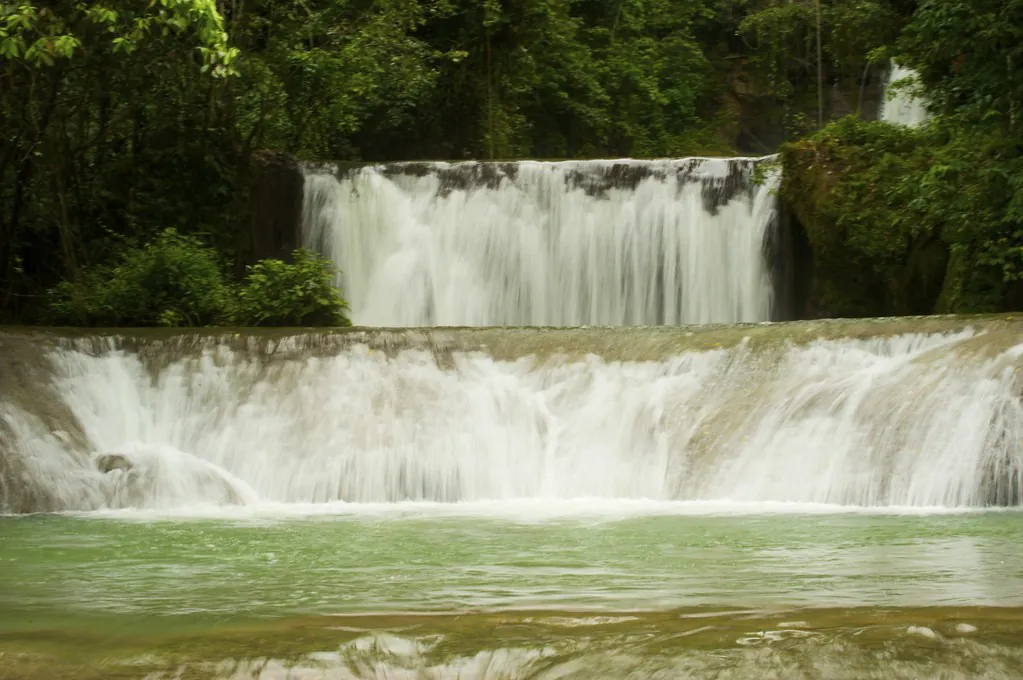
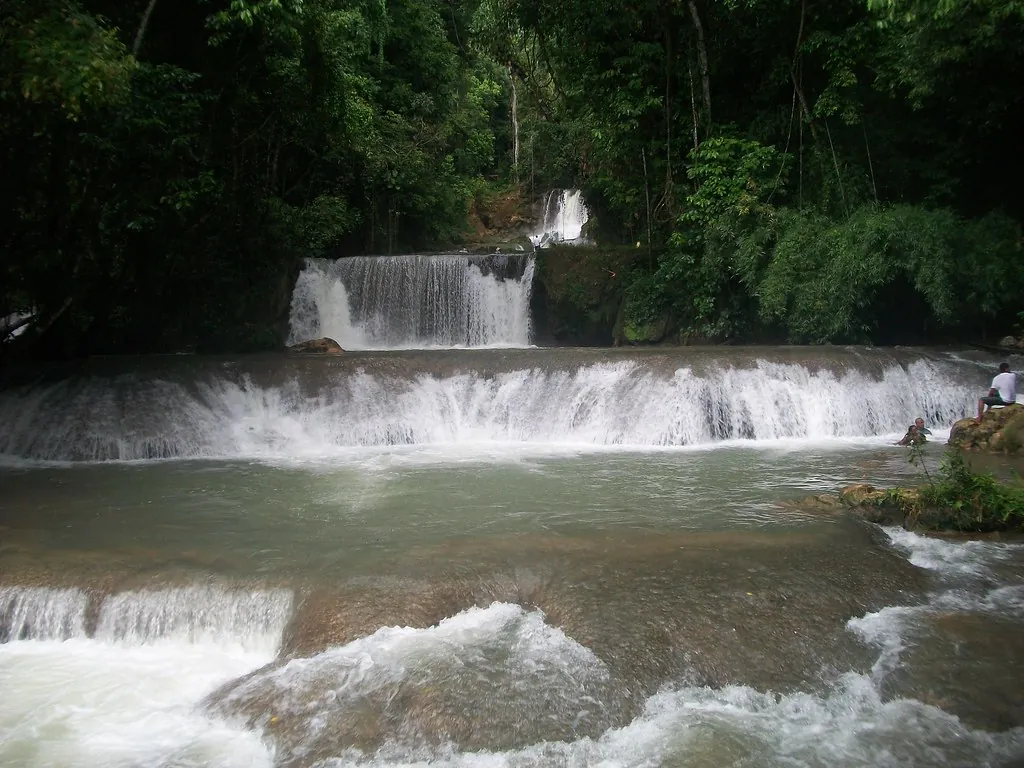
Treat the falls as a staircase rather than a single drop. Water steps down seven limestone ledges, each one scoured into its own shallow basin, and the run adds up to about 120 feet from the top tier to the lower pool. Tufa does the sculpting: where calcium-heavy spring water meets moss and open air, it leaves a chalky crust that thickens the lip of every tier and rounds off the edges of the rock. That is why the cascades look soft rather than sharp, and why the pools beneath them hold their shape through the seasons.
The lower tiers are where most people spend their time. The base pool is the widest and the deepest, with lifeguards watching from the bank and a rope line marking the safe zone. Moving up, the cascades get tighter and the pools shallower, some only knee-deep, which makes them good for sitting in with your shoulders under the fall. The top tiers are the steepest and stay roped off. Guides will wave you back if you push past, and they are right to.
| Tier | Character | How you use it |
|---|---|---|
| Lower basin | Widest pool on the site, deepest water, open to the sky | Swim, with the lifeguards’ direction |
| Tiers two and three | Short cascades into knee-to-waist pools | Wade, sit, let the water run over your back |
| Middle tiers | Narrower chutes, more spray, the shoulder-massage spot | Climb with care; the rock is slick |
| Upper tiers | Steepest drops, thinner flow in the dry season | View only, ropes mark the boundary |
Two things decide how the falls behave on the day you turn up. Season is the first. Between roughly December and April the flow thins and much of the rock sits exposed, which is easier for climbing and better for photographs of the whole staircase. From May through November the river fills, the tiers merge into broader sheets of water, and the sound in the gorge changes completely. Rain higher up the valley is the second. YS is fed by upland runoff as well as springs, and a storm two ridges away can lift the river within the hour, which is why staff close the pools after heavy weather. Our Best Time to Visit page goes into that pattern properly.
The water itself is the real surprise. It comes out of the limestone cold, usually somewhere between 21 and 24°C, and holds that temperature through the day, so the first step in is a shock to the chest that no resort pool prepares you for. Colour shifts with light and depth: pale jade over sand and gravel, deep olive where the pool bottoms out. Tannins from leaf litter stain the surrounding rock a tea-brown in places. Clarity stays high because spring water carries very little sediment, which means you can see the bottom of the shallow tiers from the bank. The watershed that feeds all of this falls under the National Environment and Planning Agency’s remit, and their published material at nepa.gov.jm [Official Agency] is the place to go if you want the hydrology rather than the holiday version. The YS River keeps running toward the sea, and the wildlife along that lower stretch, crocodiles included, belongs to a different story, told on our Black River guide.
What Grows and What Flies
YS Falls sits inside a working estate, and the estate sets the tone long before you reach the water. The drive in crosses pasture, and Brahman-cross cattle lift their heads as the vehicle passes. Fences are patched with whatever came to hand. Pimento trees, allspice if you know it by the kitchen name, grow in stands across this corner of Saint Elizabeth, and the parish supplies most of the world’s crop. Fragments of old sugar-era stonework survive near the entrance, half swallowed by vines. The Jamaica Information Service keeps parish-level background at jis.gov.jm [Government Portal] if you want the history behind the ruins.
The tractor-drawn jitney that carries visitors from the welcome centre down to the falls is not a gimmick, whatever the marketing suggests. It is a slow landscape tour with a diesel soundtrack, ten minutes of pasture and tree canopy each way, and it rewards a second look on the return trip once your eyes have adjusted to the shade. Sit on the left going down if you want the river glimpses; sit anywhere coming back and watch teh light change in the bamboo.
- Pimento and allspice trees, the parish’s signature crop
- Bamboo groves thick enough to knock the wind out of the gorge
- Tree ferns and wild taro along the wet banks of the river
- Ackee, mango, breadfruit and guinep in the dooryard plots near the car park
- Mahogany and cedar remnants from older planting
- Epiphytes, mosses and liverworts coating every rock face the spray reaches
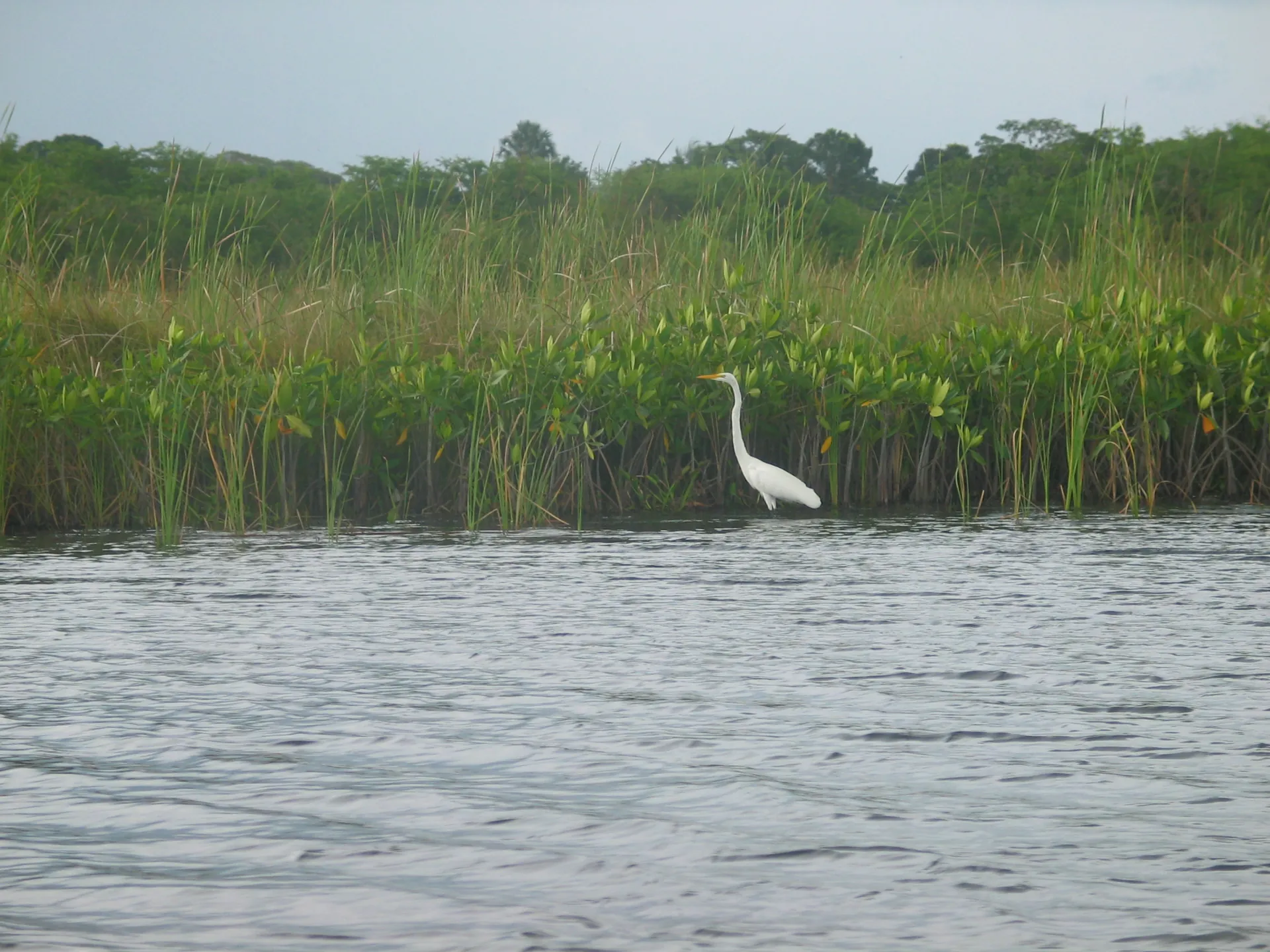
Wildlife is a matter of luck and patience rather than a guarantee. Hummingbirds work the flowering shrubs near the lower deck, and the streamer-tailed hummingbird turns up often enough that birders linger there. Jamaican todies call from the understorey, bananaquits raid anything sweet, and Jamaican orioles flash through the canopy. Along the water you may catch herons standing dead still, plus dragonflies and butterflies in the sunlit gaps. In the pools, freshwater shrimp and mountain mullet are easy to spot if you keep still, and freshwater crabs work the gravel edges. The Jamaican yellow boa, harmless and endemic, sometimes crosses the path.
No crocodiles live in this stretch of river; those belong to the Black River downstream. The Jamaican iguana is not found in this valley either, despite what a hopeful tour guide might imply. The mongoose you glimpse on the pasture is an introduced species and no friend to ground-nesting birds.
Viewpoints and Photography
The falls reveal themselves in stages, and the sequence deserves a slow walk rather than a rush. From the welcome centre you catch a flash of white through the trees, enough to set the direction but not enough to judge scale. The path down tightens under canopy, and the sound arrives before the view does. The canopy walkway gives you the first proper look along the gorge, with the tiers stacked below you. Deeper in, the lower deck puts you level with the base pool and the widest curtain of water. The upper-tier overlook, reached by a short climb, is the view that explains the whole staircase at once.
Photographers who want the shot that matches what YS Falls in Jamaica actually feels like should work with the gorge, not against it. Shade covers most of the water for much of the day.
Shoot the gorge early. By half past ten the sun is high enough to burn out the water while the canopy stays black, and no filter fixes that completely. I walk the full path once without the camera, then come back for the frames I actually want.
- Morning light is soft and even in the gorge; midday creates the hardest contrast between dark canopy and bright water
- A polarising filter cuts glare off wet rock and pulls colour out of the pools
- A dry bag or a simple roll-top pouch beats trusting a pocket
- Tripods on wet limestone are a hazard to you and to everyone behind you, so keep them short and out of the walking line
- Drone use falls under Jamaica Civil Aviation Authority rules at jcaa.gov.jm [Official Regulator], and flying inside the gorge is not something to assume; ask at the office first
- Commercial shoots, wedding photography included, need arranging with the estate in advance
The canopy zipline is the only vantage point above the treeline, which makes it a nature-viewing platform as much as a thrill. Cables run across the valley in a series of spans, and from up there you can trace the river’s course through the pimento and bamboo in a way the footpath never shows you. Weight and age limits are set by the operator and enforced on the day, so check current figures at ysfalls.com [Official Website] before building a day around it. If heights are not your thing, the walkway delivers a decent version of the same view with both feet on timber. How the zipline runs in practice sits on our Things to Do at YS Falls page.
Traveler Advice for the Gorge
The main pool at the base is the one everyone wants a swim in, and it is deep enough in the middle to be out of your depth, which is why the lifeguards keep a rope line and a head count. Further up, the plunge pools are shallow at the edges and startlingly cold underneath. There is a spot under one of the middle cascades where the water lands on your shoulders with real force, and it is as good as anything the spa resorts charge for, except the rock beneath it is slick with algae. River shoes with proper grip are the difference between a confident hour in the water and a nervous one.
- Wear shoes you can swim in; flip-flops end up floating downstream
- Walk the gorge before you swim it, so you know where the drop-offs sit
- Expect coach and cruise groups between late morning and early afternoon; the falls are quietest in the first hour after opening
- Afternoon thunderstorms build fast over the Santa Cruz Mountains; watch the sky and follow staff if the pools close
- Take nothing into the water that you would mind losing
- Light fades early in a gorge this deep, so plan your climb out before dusk
Access around the site is limited by terrain rather than policy. The steps down to the water are steep in places, and sections of the walkway would be hard going with a pushchair or a walking frame. The estate does what it can with the handrails and the tractor ride, though the honest advice is to read our Plan Your Visit page before committing if mobility is a factor. The wider regional picture, including how Saint Elizabeth fits into a South Coast itinerary, is on our Saint Elizabeth parish guide.
Coming Here as Part of a Tour
Most visitors reach YS Falls on an organised run from Negril, Montego Bay or the cruise terminals, simply because the drive is long and the final stretch is rural. Guided days usually bundle the falls with a Black River boat trip or the Appleton Estate rum tour, and the better ones build in enough time to actually get in the water rather than photograph it from the deck. The Jamaica Tourist Board lists the parish’s attractions at visitjamaica.com [Official Tourism Site]. Routes, timings and self-drive considerations are covered on How to Get to YS Falls, and if you are weighing up formats, the comparison sits on Tickets & Tours.