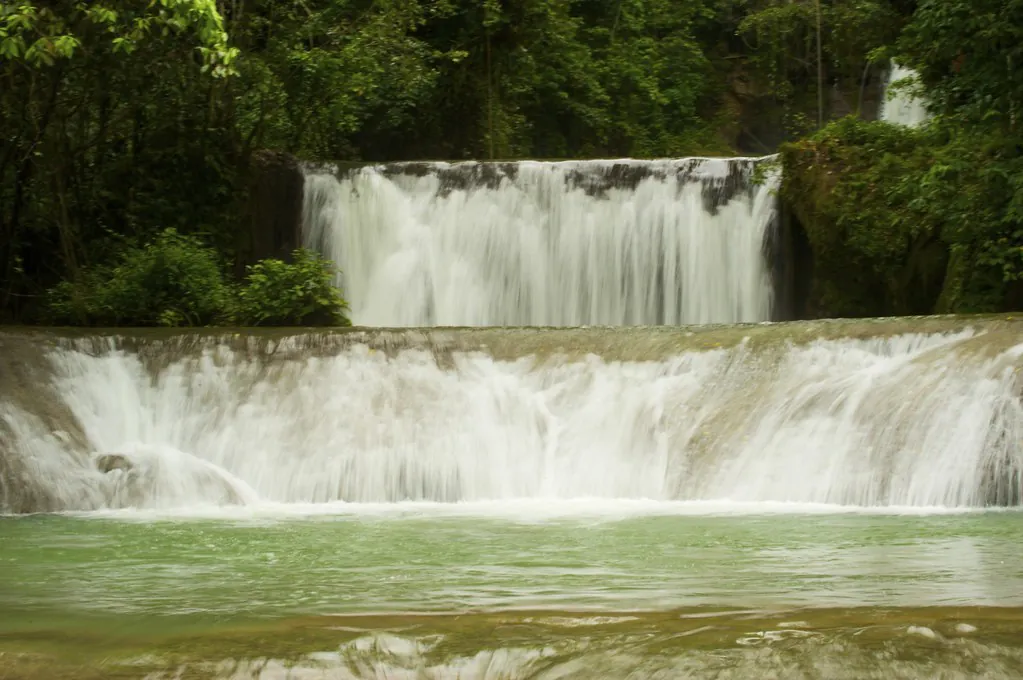
The first stall I stopped at outside Black River sat under a tamarind tree, and I made the mistake every new arrival makes. I walked up, pointed at a bunch of green bananas and asked the price. The woman behind the table looked at me for a long second, then said “Good afternoon” with the patience of someone who has done this a thousand times before. I said it back. Only then did we talk about bananas, and only then did the price appear. Years of coming and going along this coast and I still remember that pause, because it taught me more about Jamaica than any chapter in a guidebook.What follows is not a set of rules copied from a hotel leaflet. It is working knowledge gathered the slow way: from a woman who splits her year between the South Coast and a damp flat in Bristol, who has swum in the cold pools below the seven tiers more times than she can count, and who has learned, occasionally by getting it wrong in public, how visitors are read here. You are coming for the water and the light. The customs are what let you enjoy both without friction.
Respect in Jamaica is an exchange, not a performance. You give the greeting, you get the welcome, and the arithmetic runs in both directions.
Jamaican social life turns on eye contact, names and a long memory for who was polite last Tuesday. Transactional briskness, the sort of clipped efficiency that passes for good service in a European city, reads as cold here. Nobody will scold you for it. Doors simply close quietly rather than loudly, and you may never notice they have.The greeting is teh entry fee, and it costs you nothing. Say it, wait for the answer, and the whole tone of the exchange changes. That principle holds whether you are buying a Red Stripe at a rum bar in junction, asking a gardener at YS Falls where the path to the upper pool goes, or checking into a guesthouse in Treasure Beach after a long drive from Montego Bay.
Eye contact at the start of a conversation, held for a beat rather than skittering towards the floor.
A greeting before any request, however small: directions, a price, a photograph, a seat.
Patience with pace, most obviously on Sundays and through the dead heat of mid-afternoon.
A name remembered and used, of a driver, a vendor, a groundskeeper, whoever you spoke with yesterday.
Greetings First, Business Second
Good morning, good afternoon, good evening.These three carry you through most of the island. They are not tied to the clock with Swiss precision: “good morning” holds until lunch, “good evening” from late afternoon. In casual settings you will hear “Respect,” offered as a greeting and an acknowledgement in one word. Answer it with the same word or a nod and a smile. A handshake is standard between men and between strangers in business; a fist bump or a light clasp lands fine too. With elders and officials, use Mr, Mrs or Ms plus the surname until invited otherwise.
If you forget, say so and start again.Almost everyone does, especially at the end of a long transfer when the driver has already asked where you are headed. Stop, introduce yourself, then put the question. “Afternoon, sorry, I skipped my manners. I’m Gemma, are you heading to Black River?” That one sentence repairs a small rudeness before it becomes one. It works at reception desks, at food stalls and at the roadside gates where you might ask about access to a river.
Address the person before the question. The question lands softer, and the answer is usually longer and better.
English, Patois, and How to Listen
Jamaican Standard English is the official language and you will manage perfectly well with it. Jamaican Patois, or Patwah, is the language of the street, the market, the churchyard joke and the song lyric, a creole built from West African grammar, English vocabulary and traces of Spanish and French. Plenty of people move between the two mid-sentence, and no visitor is expected to follow every turn of it.The thing to avoid is performing. A visitor who drops a heavy accent and a fistful of half-remembered phrases to seem friendly tends to land somewhere between awkward and mocking, and the reaction is polite but final. Ask instead. Say you don’t catch that one, ask what it means, write it down. People are generous with a sincere learner and rightly wary of an impersonator. If you want the official picture on language and national life, the Jamaica Information Service is the government’s own news and reference agency and it is a useful grounding.
Respect — hello, acknowledged, I see you. Useful everywhere, always appropriate.
Wah gwaan? — how are things? Friendly and informal; fine with people your own age who have already greeted you.
Irie — good, calm, settled. Not a word to force; it will sound odd bolted onto a sentence about breakfast.
Soon come — it will happen in its own time. Learn it as a description of Jamaican pace rather than a delay you need to argue with.
Bredren / Sistren — brother, sister. Warm between friends; don’t open with it on a first meeting.
Tipping, Pricing, and Money Customs
Jamaican dollars are the local currency and US dollars are accepted almost everywhere visitors go, usually at a rate that favours the seller slightly. Greet the person, then ask which currency they would rather have. Tipping is expected in tourism and appreciated outside it: the figures below are guidelines as of early 2026, offered in cash where you can manage it, because card fees eat into small amounts.
Service
Typical Gratuity
Notes
Guides and drivers
10–15%
Cash, handed over directly, never left on a seat
Restaurant servers
10–15%
Check whether a service charge already appears on the bill
Housekeeping
US$1–2 per day
Left daily rather than in one lump at the end of a stay
Bar staff
10% or round up
Applies at a rum bar as much as at a hotel lounge
Craft vendors
No tip expected
Bargaining is normal; rudeness is not
At a craft market, the dance is straightforward. Ask the price, compliment the piece honestly, counter once with a figure you can defend, then accept the answer. Walking away politely is part of the ritual and nobody takes offence if you return later. What grates is grinding a vendor down over a hand-carved item that costs less than your airport coffee, then announcing that you got a bargain. There is no etiquette problem with negotiating. There is one with treating a person’s work as a game.For currency, safety basics and entry requirements, Visit Jamaica is the national tourist board’s own site and keeps its visitor information current. Sort your cash before you leave the coast road; ATMs thin out badly once you turn inland towards the falls.
Photography Etiquette: People, Markets, and Communities
Ask first, and mean the ask.Point at your camera, raise your eyebrows, wait. A nod means yes, a hand raised flat means no, and both answers are complete sentences that need no negotiation. If someone says yes, show them the frame afterwards and delete it if they ask. Offer to send a copy by WhatsApp; people do take you up on it.
Children and school groups are different.Never photograph a child without a parent or guardian standing there and agreeing. In school uniform, on a school trip, the answer is no, full stop. Turn the camera away. The same discretion applies to yards, verandahs and washing lines, which are private space even when they open directly onto a road.
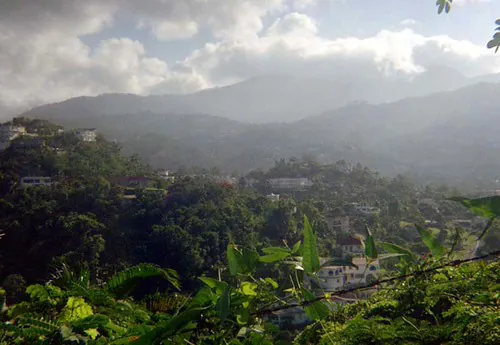
Privacy sensitivities run deepest in low-income communities, where a camera can feel less like flattery and more like an audit. A wide lens swung across a yard in a country district reads as appraisal, and it causes quiet offence that you will never hear about. Frame the landscape, the door, the hands working, and leave the household out of it. For shots at the falls themselves, the practical constraints on where you can stand and what you can carry differ from the roadside, and our visitor rules and guidelines hold the authoritative version rather than this page.“Kingston, Jamaica” by James Willamor is licensed under BY-SA. Source: Openverse
Interaction with Local Communities
The resort bubble is comfortable and pleasant and it is not Jamaica. Step outside it and the question becomes what you are actually there for: curiosity or spectacle. Respectful curiosity asks a vendor what she sells most of in October, or how long the drive to Mandeville takes in the rain. Poverty tourism photographs the same woman and drives on. The two look similar from a distance and feel entirely different at arm’s length.Conversation is easy here if you let it lead. Ask about names, work, family, the price of sorrel in December. Listen longer than you talk. Leave the comparisons at home, particularly the ones that start with how things are done back where you come from, and skip the lectures entirely. Nobody in a rural parish needs a visitor explaining how the country should be run. For a sense of what the island is talking about right now, from politics to parish news, the Jamaica Gleaner has been publishing since 1834 and remains a decent daily read.
Unsolicited advice about local politics, religion or how the country should organise itself.
Comparative grumbling, especially about roads, service or “island time.”
Saviour framing: language that casts you as rescuer and residents as project.
Unsolicited commentary on someone’s property, appearance or income.
Dress and Appearance
Beachwear stays at the beach. That means bikinis and bare torsos at the shoreline, not in a supermarket in Santa Cruz, not on a route taxi, not in a church hall, and not through a school gate. A sarong or a t-shirt takes ten seconds to pull on and shifts how you are received for the rest of the afternoon.
Inland St. Elizabeth leans conservative and churchgoing in a way the resort strip does not. Modest dress reads as respect rather than restriction: shoulders covered, shorts at least mid-thigh, a light layer for air-conditioned buses and the cooler air that drops over the hills after four in the afternoon.
Carry a thin cotton shirt in your bag. It sorts churchyards, school gates and chilly minibuses in one go.
The parish has its own character, and it is worth understanding before you arrive. Our guide to Saint Elizabeth walks through the geography, the communities and the crops, and it explains why this corner of the island feels nothing like the north coast.
Sunday, Churches, and Rastafari Grounds
Sunday observance is real in rural parishes. Shops in smaller towns open late, if at all. Church services fill the morning and people are dressed for them, in suits, hats and pressed dresses that carry a great deal of pride. If you attend a service, dress soberly, sit quietly at the back unless invited forward, and put your phone away. Photography inside a church needs permission from whoever is leading, asked before the service begins rather than during the sermon.Rastafari communities around the island have their own protocols. Some grounds welcome visitors; others are private, and filming is refused outright. Ask at the gate. Accept a refusal without pushing, and never treat a reasoning session or a drumming circle as a photo opportunity you are owed. Ganja, incidentally, is a sacrament in that context rather than a souvenir, and reading the room matters more than knowing the law.
The Ganja Question
Jamaica decriminalised possession of small quantities of ganja for personal use in 2015, and licensed dispensaries operate legally in several tourist areas including Negril and Montego Bay. Decriminalised is not the same as a free-for-all. Possession of larger amounts, sale outside licensed premises and transport across borders all remain criminal matters, and an offer on a beach is a different proposition from a counter in a licensed shop.Etiquette sits alongside the law here. Do not assume that the person beside you smokes, and do not assume that a Rastafari man wants to talk about it. If you are offered and you would rather not, a plain “no thank you” ends it. If you are interested, buy from a regulated dispensary rather than a stranger in a car park, which avoids both the legal grey zone and the inflated tourist price.
LGBTQ+ Travel Context
Jamaican law retains colonial-era provisions that criminalise same-sex sexual activity between men, and social attitudes differ sharply between town and country. Kingston, Montego Bay and Negril are noticeably more cosmopolitan, with venues and hotels that welcome same-sex couples without comment. Rural parishes including parts of St. Elizabeth are more socially conservative, and discretion there is sensible rather than shameful: it is a practical judgement about a specific place, not a verdict on the island.The UK Foreign, Commonwealth and Development Office travel advice sets out the current legal position and safety guidance clearly, and it is worth ten minutes before you fly. Nobody needs a lecture from a visitor about any of this. Everyone benefits from reading up first.
Gift-Giving, Charity, and Children
Sweets, coins and small gifts handed to children from a car window feel kind and cause real problems. They encourage begging, they pull children away from school gates, and they put pressure on families who would rather their kids were not asking strangers for anything. If you want to help, help through structures: buy from local vendors, hire local guides, or give to a school or community organisation that a resident recommends and that will still be there after you have flown home.
Transport Etiquette: Route Taxis, Buses, and Shared Rides
Greet the driver when you get in. On a route taxi or a minibus, that greeting covers everyone aboard: “Good afternoon” to the vehicle in general is normal and expected. Expect close quarters, expect the music to be loud, and keep your own volume below it. Payment usually happens at the end, in cash, passed forward or handed over as you climb out; ask at the start if you are unsure of the fare. Offer your seat to an elderly passenger or someone carrying a child, and keep your bag on your lap rather than across an empty space when the bus fills up.Driving yourself inland from the coast road brings its own etiquette. Don’t beep at pedestrians who are already crossing, slow down through villages rather than hurtling through them, and accept that the journey takes what it takes. Full route detail from Negril and the main visitor bases sits on our transport page rather than here.
At Waterfalls, Rivers, and Protected Places
Natural sites ask for the same courtesy a village does. Take your litter out with you, including fruit peel, which no one wants to see floating downstream. No soap, shampoo or sunscreen is washed off in a river pool; the water is somebody’s downstream supply as well as your swim. Stay off closed paths and out of roped-off areas, don’t climb wet rock faces with a phone in one hand, and keep your distance from birds, crabs, crayfish and the small fish that gather in the shallows. Feeding wildlife is never a kindness.On the coast, use reef-safe sunscreen rather than any old bottle, and give the mangroves at the river mouth the same respect you would give a coral reef. Water shoes with grip, a change of dry clothes and a dry bag are worth more than a camera bag here.The specific ys falls rules, covering footwear, pool depths, life jackets, belongings and where photography is permitted, sit on one page and one page only. Read those before you arrive, because the ys falls attraction manages water flow and safety differently throughout the year.
Your driver is the person your whole day rests on, and the greeting rule applies with full force at six in the morning outside a hotel gate. Ask their name, use it, and ask what they think is worth seeing on the route; a good driver on the South Coast has opinions about which jerk stand is worth the stop, and they are usually right. At the end of the day, thank them properly and hand the tip over in cash rather than leaving it on the seat.If you would rather have the driving and the entrance arrangements sorted for you, the tickets and tours hub compares tour formats, transfers and cancellation terms, and there is a separate breakdown for pairing the falls with a river cruise on the YS Falls and Black River safari page. Booking through a platform rather than turning up at the gate gives you flexibility if the weather shifts. Turning up on your own terms is a perfectly good alternative.The zipline, the tractor-jitney ride through the pastures and the canopy walk each carry their own practical notes, all gathered on the ys falls activities page so this one stays about people rather than logistics.
The Short Version
Greet before you ask. Ask before you photograph. Listen more than you perform. Cover up when you leave the sand. Pay people fairly and in cash when you can, and leave the river exactly as you found it. None of that is exotic, and all of it is noticed. The customs here are not obstacles between you and a good holiday; they are the thing that makes the good holiday possible, whether you are standing under the cold curtain of water at the falls or eating a patty on a bench in Black River while the afternoon goes soft around you.If you are building a longer itinerary out of a Negril base, our South Coast day-trip guide covers realistic timings and return logistics, and the nature guide explains what you are actually looking at once you reach the gorge: the tiers, the vegetation, the light through the canopy and the small wildlife that shares the water with you.
YS Falls is in Saint Elizabeth Parish on Jamaica’s south-west coast, in Cornwall County, roughly 35 kilometres inland from the parish capital at Black River. That single line settles the question travellers type most often about the place, and it is a line most guides bury beneath three paragraphs of scene-setting. Saint Elizabeth is Jamaica’s…
Jamaica Road-Trip Planning: Routes, Stops & Timing There is a particular pleasure in leaving Jamaica’s all-inclusive resorts behind and setting out across the island under your own steam. The road winds through parishes where sugar-cane fields stretch towards the hills, roadside vendors tend their stalls beneath the trees, and the Caribbean Sea appears between bends…
Black River, Jamaica: What to Know Before You Visit Black River is the sort of South Coast place that rewards travellers who leave a little breathing room in the itinerary. The town sits in St. Elizabeth Parish beside Jamaica’s longest navigable river, with the Black River Lower Morass stretching inland behind it. Come for the…
Beyond YS Falls Seven Mile Beach is glorious, and after several days around Negril it can be surprisingly easy to forget how quickly Jamaica changes once you head east. The resort strip gives way to cane country, small roadside communities and the broad Great Morass, then the landscape begins to fold towards the hills of…
Beyond YS Falls Use YS Falls as a starting point for exploring Jamaica’s quieter South Coast rather than trying to pack every attraction into one hurried day. Black River, Treasure Beach, the surrounding Saint Elizabeth countryside, and the wider South Coast each have a different rhythm, so choose a nearby stop that fits your time…
Planning a South Coast Jamaica Multi-Stop Itinerary Jamaica’s South Coast rewards travellers who leave a little space in the day. Beyond the resort belt, the landscape shifts through pasture, cane country, fishing communities and river country, with Saint Elizabeth giving you a particularly good reason to slow the car down and pay attention. YS Falls…